
IP Camera vs HD Camera Which Is Better for Home? The Honest 2026 Guide
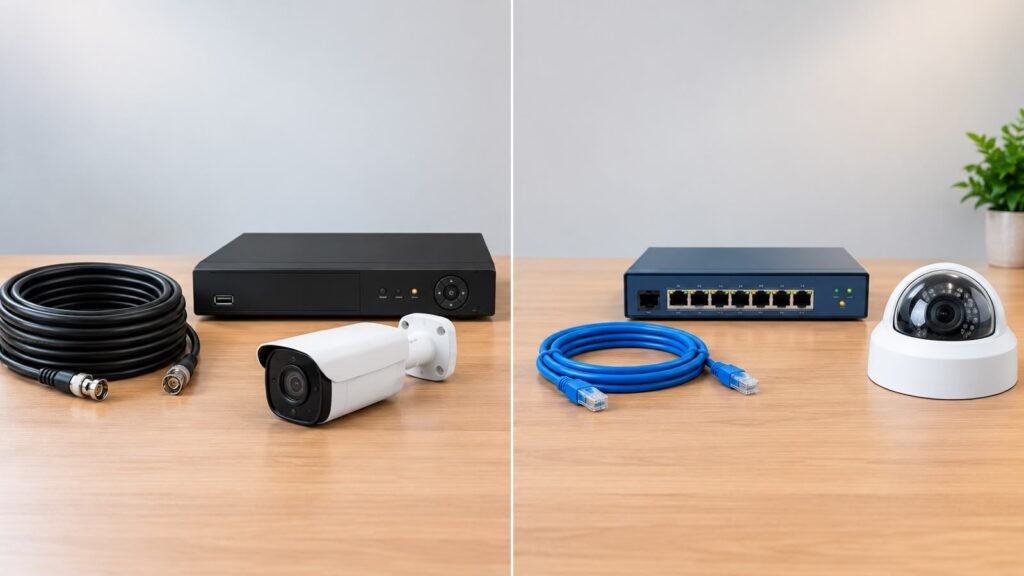
Introduction: A Question With a Hidden Trick After ten years of blogging, I’ve learned that the most-searched questions often hide a confusing detail. This one does. People type “IP camera vs HD camera” as if one of them isn’t HD. In reality, both can be high definition. The real difference is how the video travels, not how sharp it looks. So if you’re stuck on ip camera vs hd camera which is better for home, you’re not really choosing between “sharp” and “not sharp.” You’re choosing between two different technologies, each with its own cost, cabling and upgrade path. In this guide we’ll clear up the terms, compare both side by side, look at costs, and give you a verdict by home type. At the end, I’ll compare ten brands that sell these systems in India. First, What Do These Terms Actually Mean? HD camera (analog HD): This usually means AHD, HD-TVI or HD-CVI cameras. They send video over coaxial cable to a DVR, which records it. Resolution commonly ranges from 2MP to 5MP, and some go higher. IP camera (network camera): This one converts video into digital data and sends it over a network cable (Ethernet), usually with PoE (Power over Ethernet), to an NVR. Resolutions range from 2MP to 8MP and above. Why the confusion? Many shops say “HD camera” for the older analog-style system and “IP camera” for the newer one. Both can deliver Full HD (1080p). So when readers ask about ip camera vs hd camera which is better for home, I always ask first: “Do you mean analog HD or network?” The Short Answer: IP Camera vs HD Camera Which Is Better for Home? Here’s my honest take, before the detail: So the answer to ip camera vs hd camera which is better for home depends on your wiring, budget and plans. There’s no single winner for every house. Let’s look at why. Side-by-Side: IP Camera vs HD Camera Which Is Better for Home? Factor Analog HD (AHD/TVI/CVI) IP (network) camera Cable Coaxial, plus power cable (or power over coax on some models) Ethernet (Cat5e/Cat6), PoE carries power Recorder DVR NVR Typical resolution 2MP to 5MP 2MP to 8MP and higher Image detail Good, but compression and cable limits apply Generally better detail and wider range of options Cost Lower for cameras and recorders Higher upfront Existing wiring Reuses old coax, which saves money in upgrades Needs network cabling, often new Cable distance Long runs possible on coax About 100 metres per Ethernet run without extenders Smart features Fewer, though some DVRs add basic detection Person and vehicle detection, line crossing and more on many models Scaling up Limited by DVR channels Flexible, since cameras sit on your network Setup complexity Simple Slightly more technical (network settings) Cybersecurity Lower exposure to network risks Needs strong passwords and updates Best for Budget, small homes, retrofits New builds, larger homes, upgrades This table is the heart of ip camera vs hd camera which is better for home. Everything else is detail about how these differences affect your situation. Image Quality: Is IP Really Sharper? Usually yes, but not always by a dramatic margin. An IP camera processes the image inside the camera and sends it as digital data, so there’s little signal loss. It also supports higher resolutions and better sensors, which helps with faces and number plates. A good analog HD camera, installed with decent cable, delivers clear Full HD or 4MP footage that’s perfectly adequate for most homes. Poor cable or weak power supplies, not the technology itself, cause most blurry or noisy analog footage. My rule: if you need to read number plates at a gate, or want wide coverage with fewer cameras, IP gives more headroom. For a balcony or a living room, analog HD is usually enough. Cabling and Installation: Where Most Decisions Are Really Made This is where ip camera vs hd camera which is better for home often gets decided. Analog HD: If your home already has coaxial cabling from an older CCTV setup, upgrading to HD cameras can reuse it. That saves labour and mess. You’ll still need power for each camera, either through separate adapters or power-over-coax models. IP with PoE: One Ethernet cable carries both data and power. That’s tidy and cleaner for new construction, but if your walls are already finished, running new cable can be costly. Distance: Ethernet runs are limited to about 100 metres without extra equipment. Most homes stay well within that, but a large villa with a far gate may need a switch or extender. Power backup: In both systems, a UPS is crucial. A PoE switch and NVR on a UPS can keep an IP system recording through short power cuts. Storage and Bandwidth Higher resolution means more data. An IP system with 4MP or 8MP cameras will eat disk space faster than 2MP analog HD, though modern compression (H.265) helps a lot. Both systems record to a hard disk. Use a surveillance-grade disk and choose size based on resolution, number of cameras, and how many days you want to keep, typically 7 to 15 days for homes. Test playback monthly on either system, because a recorder can look fine while recording nothing. Remote Viewing, Smart Features and Everyday Use Both types of recorders can support mobile viewing, so this isn’t a clear difference. Where IP pulls ahead is smart features: person and vehicle detection, line crossing alerts, better motion filtering and two-way audio on many models. These cut false alarms from shadows, insects and passing headlights. Analog HD systems are simpler. Many users prefer that. If you only want to record and occasionally check the footage, simple works well. Whatever you choose, change default passwords and keep firmware updated. This matters more for IP, since network devices can become targets if left unsecured. Cost: What You’ll Actually Pay Prices change by brand and installation conditions, so these are rough planning ranges only. Setup Analog HD (installed) IP (installed) 2
IP Camera vs HD Camera Which Is Better for Home? The Honest 2026 Guide Read More »